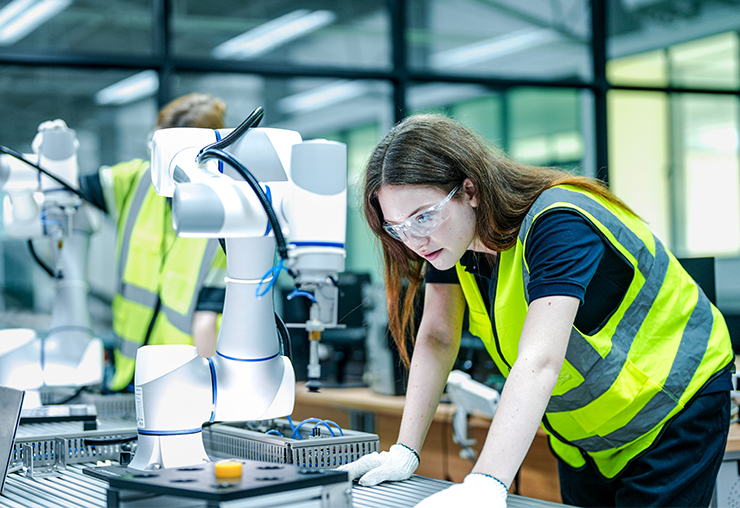
However, robotics still remains a developing field, and the complexity of automation presents significant challenges. Many manufacturing business owners assume the primary challenges of robotic process automation to be technical: implementation, integration, cost, troubleshooting, and training. These concerns are understandable, given the technology-heavy nature of these issues. As a result, organizations often focus mainly on these same minutia, appointing technical experts to lead these initiatives. These leaders are typically engrossed in technical details, such as granular data, metrics, and efficiency.
Conversely, employees within manufacturing units often express concerns about how automation affects their day-to-day work and job security. This disparity in perspectives—between management’s focus on advancement and employees’ concerns about their immediate interests—can create tension and resistance. When employees feel ambivalent or anxious, they may resist new technologies, leading to low morale and reduced productivity. This resistance can ultimately cause the failure of many automation initiatives, as the human element is foundational to successful implementation.
Bridging the Gap Between People and Process Automation
According to one labor market study from 2024, “40% of industry respondents say they still don’t have enough warehouse workers to meet demand.” In other words, robots aren’t likely to be replacing jobs en masse any time soon. Instead, there’s enormous potential for workers to get much-needed help for an already-strenuous job, making their work-life easier and more productive.
However, just because people’s fears are misplaced doesn’t mean they’re wrong. In a workplace where employees take pride in their work, develop relationships, and spend time every day, the sudden appearance of robotics can be abrasive, even scary. The fear of losing jobs to automation is a significant worry for many workers, who see robots as potential threats to their livelihoods. This anxiety, rooted in the perception that machines might render human skills obsolete, is a major barrier against adoption. If left unaddressed, this will undermine the entire transformation project.
Business leaders must recognize these concerns and take proactive steps to address them. It’s essential to engage employees early in the automation process, providing clear communication about how technology can enhance their roles rather than replace them. Offering training and upskilling opportunities empowers employees to adapt to new technologies, enabling them to work alongside robots effectively.