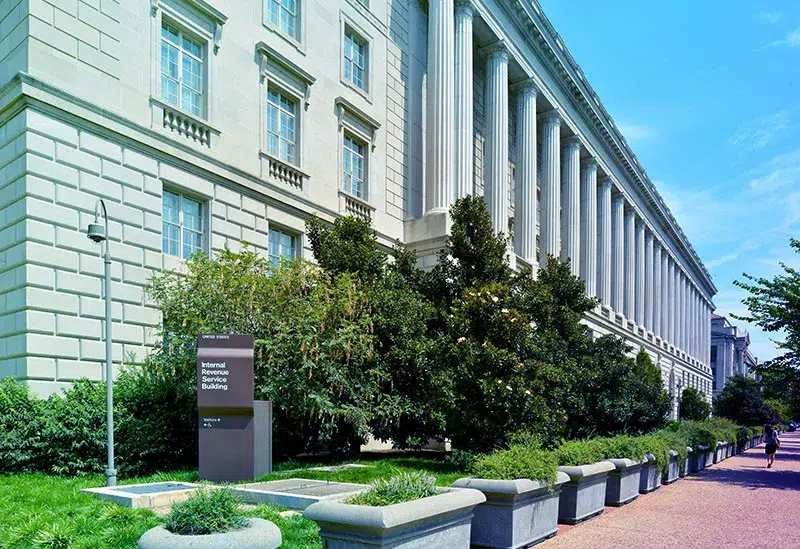
Worker-safety guidelines aren’t suspension orders, agency says, teeing up legal fight
A lot of federal money is riding on what counts as a government order, and the Internal Revenue Service and tax firms are preparing for legal fights about that crucial definition.
Employers can claim a pandemic-era tax credit worth up to $26,000 per worker if a government order fully or partially suspended their operations. Some employers and tax advisers say they can rely on Occupational Safety and Health Administration guidelines encouraging ventilation, physical distancing and other measures.
Nope, the IRS says.
The IRS argument, detailed in a recently published memo, is the latest sign of the tax agency’s tough line in audits of the employee retention credit, or ERC. The credit has cost the government at least $230 billion, roughly triple earlier estimates, after a cottage industry of firms popped up to help employers claim it. The IRS says fraud and ineligible claims are rampant, and it is now giving auditors a road map for denying refunds.
The IRS detailed its argument on OSHA guidelines more than three years after Congress created the credit in 2020.
“What we are seeing right now is the IRS is basically taking a position to disallow everything,” said Eric Stenson, co-founder of Arizona-based Stenson Tamaddon, which has worked on about 4,000 ERC claims. “They say you can bring it up on appeal or litigate it if you don’t like it.”
Even before the memo, the IRS had halted processing of new ERC refunds, started thousands of audits and promised tougher scrutiny of unpaid claims. It will soon announce a program to let employers repay credits they now regret claiming.
To qualify for the ERC, employers have two routes. They can show a minimum specified revenue drop, an easy metric for the IRS to verify. Or they can show that a government order suspended their operations.
Some orders are obviously orders, such as a governor’s closure of indoor dining. Others are gray areas.
Those making the argument for using OSHA guidelines note that employers can be fined for failing to protect workers and that many employers had to make meaningful changes to operations to comply.
In the memo, IRS attorney Rachel Leiser Levy disagrees.
“The OSHA communications explicitly do not command or mandate any employer to take any specific action, leaving it outside the ordinary meaning of the term ‘orders,’” she wrote.
The memo says employers may qualify for the ERC if a state or local government required compliance with OSHA guidelines. The memo doesn’t apply in some healthcare settings.