
Inefficient AI Models in Tax Practice
To qualify for the R&D credit, a business must have engaged in qualifying activities subject to the four-part test:
- New or improved business component developed for a permitted purpose
- Process of experimentation
- Elimination of uncertainty
- Technological in nature
While AI can sort through the data, an AI would not be able to draw any conclusion relating to the four-part test from the data provided. Generally, even if a business qualifies, the only data they will have pertaining to the R&D credit is a project list that needs to be extensively vetted.
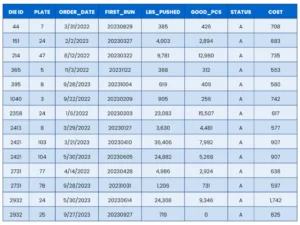
Take a look at the dataset in Figure 1. This is a typical dataset that only outlines costs and quantities associated with various parts, but it lacks detailed insights into the specific activities undertaken to create or improve these components.
Often, such data is the only thing a business can provide, and an AI will not be able to determine which of these projects underwent a process of experimentation, whether the projects were technological in nature, what uncertainty was being eliminated, or whether the project was for a permitted purpose. Note that all of these must be documented when claiming the R&D Credit. Without human interviews and onsite visits, this data will not be found anywhere in a business’s systems.
Even sophisticated businesses will, at most, supply time-tracking data to go along with their project lists. Still, this data does not speak to the four-part test, and it does not account for critical exceptions and unique circumstances.
Without explicit data detailing R&D activities, AI analysis might not recognize the presence of technological uncertainties or the experimental nature of the work. In contrast, an experienced R&D tax credit provider can determine this information through more hands-on activities and by asking the right questions.
News & Insights



Fire Ant Control and Farm Policy Take Center Stage; Mike Johanns Shares Insight for Growers
The March 20 edition of the AgNet News Hour delivered a mix of practical field insights and high-level agricultural policy discussion, giving California farmers both immediate takeaways and long-term perspective.

Mike Johanns Talks Farm Profitability, Policy, and the Future of California Agriculture
The March 19 edition of the AgNet News Hour featured a compelling and wide-ranging interview with former U.S. Secretary of Agriculture Mike Johanns, who offered insight into the economic challenges facing farmers and what it will take to sustain agriculture for the next generation.
Speak with our experts
Schedule a free consultation with our team of experts!